




The Korean Beauty Show Podcast
Why Are Korean Beauty Products Packaged in English?
On today's episode of the Korean Beauty Show, Lauren answers a listener question about English-language packaging on Korean cosmetics, explores what the introduction of MoCRA meant for the K-Beauty industry, and shares the week’s product and culture recommendations.
In this episode
K-Beauty businessWhat new US cosmetics regulation meant for Korean exporters.
Listener questionWhy so many Korean beauty brands use English on their packaging.
Culture and productsI’m From launches, listener reviews and the rise of Physical: 100.
K-Beauty news: MoCRA and the Korean beauty industry
Episode archive note: This episode was recorded when the Modernization of Cosmetics Regulation Act of 2022 was newly enacted. The discussion below reflects the information and implementation timeline available at that time and should not be treated as current regulatory advice.
The Modernization of Cosmetics Regulation Act of 2022, known as MoCRA, represented the first major update to US federal cosmetics law in more than 80 years. At the time of recording, the Korean beauty industry was actively discussing what the new requirements would mean for cosmetics exported to the United States.
Cosmetics is a broad regulatory category in the US, as it is in many other jurisdictions. MoCRA introduced a stronger federal framework focused on product safety, industry accountability and FDA oversight.
Key obligations discussed in the episode
- Reporting serious adverse events associated with cosmetic products.
- New good manufacturing practice requirements.
- Facility registration and cosmetic product listing obligations.
- Maintaining records that support the safety substantiation of products.
- Expanded labelling requirements, including fragrance allergens and professional-use products.
These changes were always likely to affect Korean cosmetics companies exporting to the US, particularly in relation to safety records, responsible-person obligations and product labelling.
Question of the week
Why are Korean beauty products packaged in English?
“Why is it that Korean skincare product packaging is always in English? The information on the back is usually in Korean, but are the front labelling and brand name in English in South Korea as well? Or do brands make specific packaging for different countries?”
My view is that English-language packaging is likely driven by two things. The first is export. English names and front-of-pack copy make it easier for Korean brands to introduce the same product to international buyers and consumers. Korea’s beauty industry has long been export-focused, and globally legible packaging supports that strategy.
The second is positioning within Korea. In the same way French can signal luxury or sophistication to English speakers, English can feel stylish, cosmopolitan or distinctive to Korean consumers. It is common to see Korean businesses use English words and phrases across signage, menus and brand names, not only in skincare and makeup.
From the original episode
New K-Beauty products
I’m From Mugwort Essence
- A vegan essence made with mugwort sourced from Ganghwa, Korea.
- A light, refreshing formula designed to soothe troubled or irritated skin.
- Made using a slow-release extraction method intended to maximise the concentrate’s nutrients.
I’m From Ginseng Serum
- Contains almost 8% ginseng extract.
- Designed to support hydration, smoother-looking texture and a more even appearance.
- Also contains betaine, green tea leaf extract and glycerin.
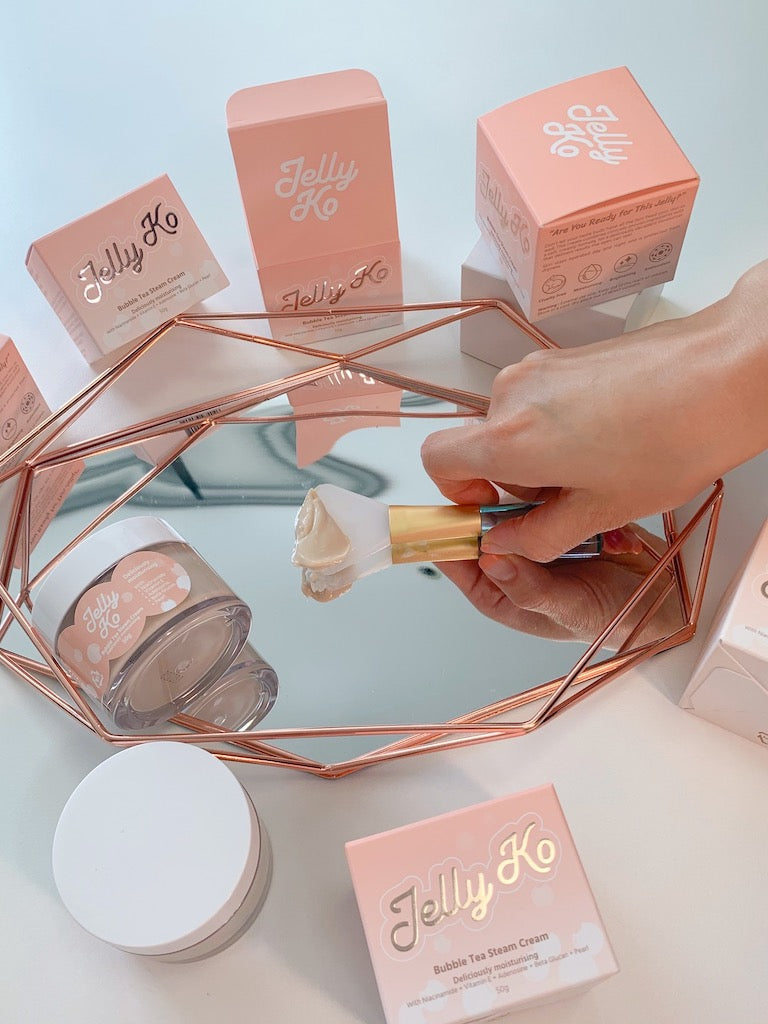
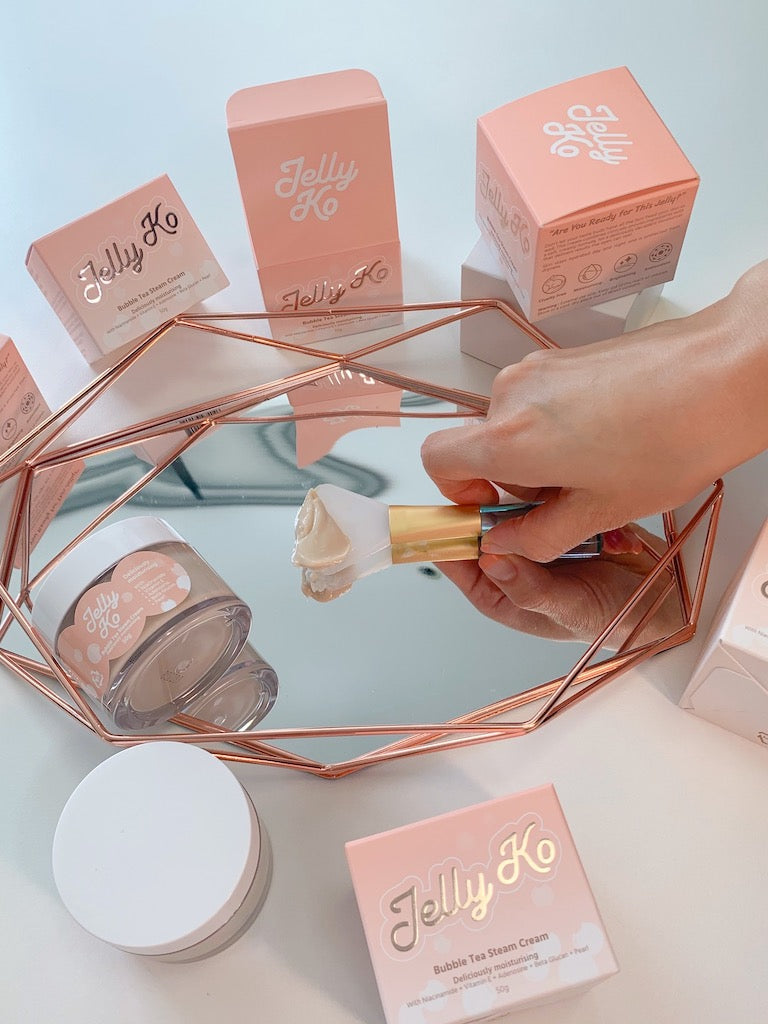
Jelly Ko
Barrier-first K-Beauty for dry, dull and dehydrated skin
Looking for the formulas created by the team behind STYLE STORY? Discover Jelly Ko’s sensorial Korean skincare, developed for skin that needs lasting comfort, hydration and glow.
Listener review: Bubble Tea Steam Cream
“My new HG!”
“I was concerned about the thickness because my skin tends to break out with thicker day creams. Three weeks on and my face has not had one breakout, not even my hormonal cystic acne at that time of the month.”
Recommendation of the week: Physical: 100
Physical: 100 is a Korean reality competition series featuring professional athletes, influencers, dancers and fighters. At the time of this episode, it was being described as a real-life Squid Game meets Tough Mudder. It is one to try if you enjoy shows like Survivor, with a side of eye candy.


Leave a comment
Comments will be approved before showing up.