



The Korean Beauty Show · Episode 36
Korean Skincare for a Dry Office
If office life is draining your skin as well as your energy, this episode explains why air conditioning and heating can leave skin feeling tight, dull and uncomfortable, plus the K-Beauty strategies that can help.
In this episode
Why offices feel dryingHow low-humidity, climate-controlled air affects skin comfort.
Seven practical strategiesSimple changes to your routine, workspace and working day.
Ingredients to knowWhy ceramides and hyaluronic acid suit dehydration-prone skin.
Why office air can leave skin feeling dry
If you work in an office, you will know the problem: constant air conditioning in summer and heating in winter. Both can reduce indoor humidity, while sitting directly in the stream of a vent can make skin feel even more uncomfortable.
For skin that is already dry, sensitive or barrier-impaired, the result may be increased tightness, flaking, itching or redness. A routine that limits unnecessary irritation and helps reduce water loss can make the working day much more comfortable.
Seven ways to combat dry office skin
01
Finish with a moisturiser that seals in hydration
Take a cue from Korean skincare and build hydration in light layers, then finish with a moisturiser containing emollient and occlusive ingredients. These help reduce water loss from the skin throughout the day.
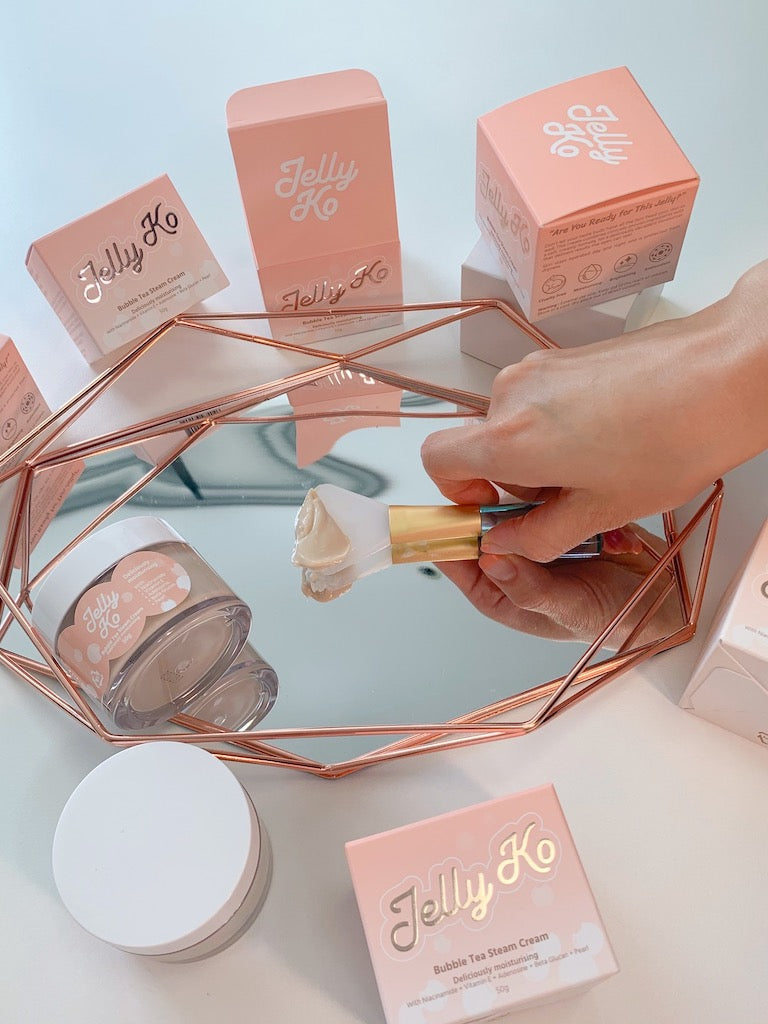
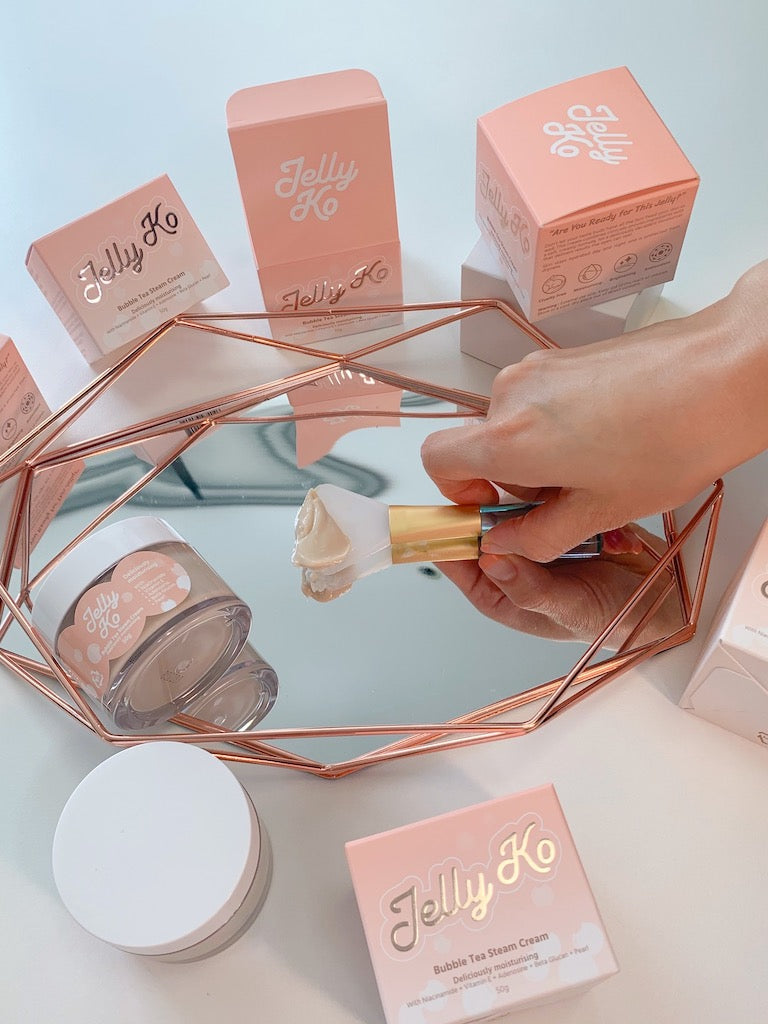
For dry or dehydration-prone skin, try Jelly Ko Bubble Tea Steam Cream.
02
Check that your routine is not making things worse
Products that sting, strip or irritate your skin can intensify dryness. If you suspect something in your routine is contributing, simplify it and reintroduce products carefully. Patch testing can help identify products that do not suit your skin.
03
Use facial mists strategically
A well-formulated mist can make skin feel more comfortable during the day, particularly when it contains humectants or emollients. A water-only mist may evaporate quickly, so do not rely on misting alone in place of a proper moisturiser.
04
Consider a desk humidifier
Humidifiers are common in Seoul offices during the dry winter months for good reason. Raising the humidity around your workspace can reduce that parched feeling in your skin, eyes and throat. Keep the unit clean and follow its care instructions.
05
Give dry eyes some attention
Dry air and long hours in front of a screen can be uncomfortable for your eyes too. Take regular screen breaks and speak with a pharmacist or eye-care professional about suitable lubricating eye drops if symptoms persist.
06
Step away from the vent
If possible, move out of the direct airflow and take short breaks away from the climate-controlled environment. Even a quick walk can give your skin, eyes and concentration a welcome reset.
07
Stay generally hydrated
Drinking more water is not a substitute for topical skincare and will not, by itself, fix dry skin. It is still sensible to drink regularly throughout the day, particularly if a heated office makes you forget.
Jelly Ko
Give dry office skin lasting comfort
Jelly Ko creates barrier-first Korean skincare for dry, dull, dehydrated and sensitive skin. Layer Dewy Glaze Toner for lightweight hydration, follow with Be Jelly Overnight Dream Serum, then seal it in with Bubble Tea Steam Cream.
The best K-Beauty ingredients for dry office skin
Korean skincare is particularly good at creating formulas that layer comfortably and support dehydrated skin. Two useful ingredient families to look for are ceramides and hyaluronic acid.
Ceramides
Ceramides are lipids naturally found in the outer layer of skin. In skincare, they can help support the moisture barrier and reduce the uncomfortable feeling associated with dry, compromised skin.
Products mentioned in the original episode included Beauty of Joseon Dynasty Cream and Dr. Jart+ Ceramidin Cream.
Hyaluronic acid
Hyaluronic acid is a humectant that helps attract and hold water. It works best as part of a balanced formula, followed by a moisturiser that helps reduce water loss, especially in a very dry environment.
Try Jelly Ko Dewy Glaze Toner or Be Jelly Overnight Dream Serum.
A quick note: Persistent itching, cracking, redness or eye irritation is worth discussing with an appropriate health professional.
Enjoyed this episode?
Follow Lauren on Instagram and share the office-skin strategy that works best for you. You can also explore more episodes and K-Beauty industry analysis at The Korean Beauty Show.



Leave a comment
Comments will be approved before showing up.