


The Business Behind Olive Young: Part 2


The Business Behind Olive Young: Part 2
Olive Young is far more than Korea’s biggest beauty retailer. It is a trend forecaster, data company, omnichannel platform and, perhaps most importantly, an incubator for emerging K-Beauty brands.
In Part 2 of The Korean Beauty Show’s deep dive into the business behind Olive Young, host Lauren Lee examines how the company turns consumer behaviour into merchandising decisions, connects its stores and digital channels and helps Korean beauty brands grow.
Lauren also looks at the more complicated side of Olive Young’s rise: regulatory action involving its supplier practices, a successful product-copying claim brought by a smaller Korean cosmetics company, the difficult transition to its new US platform and the challenges of translating its Korean success for overseas markets.
The Business Behind Olive Young: Part 2
In This Episode
- Why Olive Young is best understood as a K-Beauty incubator rather than simply a retailer
- How its merchandising organisation helps identify trends and build brands
- The role of discovery shopping, customer data and AI in its retail model
- How Olive Young connects its physical stores, online platform, rapid delivery and live commerce
- Why its product assortment and loyalty programme are so difficult for competitors to replicate
- Some of the scandals associated with Olive Young's rise
- Why its international focus shifted to the United States and what challenges it will face there
- Where K-Beauty still holds an advantage in China and where C-Beauty has closed the gap
Catch Up on Part 1
In Part 1, Lauren explores how Olive Young rose to dominate Korea’s beauty retail market, why Harvard Business School selected it for a case study and how its approach to merchandising, supplier relationships and brand building helped shape the modern K-Beauty industry.
More Than a Retailer
One phrase appears repeatedly in the Harvard Business School case study: Olive Young is an incubator.
That description captures the company’s influence better than the word “retailer” alone. Olive Young gives emerging brands access to consumers, provides market data, identifies new trends, helps refine product strategy and creates pathways for successful products to reach international customers.
Olive Young’s success is measured not only by how many products it sells, but also by how many successful brands it helps create.
For a Korean beauty brand, securing distribution through Olive Young can mean more than gaining shelf space. It can provide entry into an ecosystem capable of accelerating product discovery, validating demand and supporting future growth.

Discovery Shopping and Omnichannel Retail
Olive Young built its store experience around what it calls “Discovery Shopping”: encouraging customers to browse, test products, compare options and shop at their own pace. This was a significant departure from the assisted-selling model that traditionally dominated Korean beauty retail.
Products are commonly organised by category, function and trend rather than separated into individual brand counters. Standardised fixtures, layouts and customer flows also create a familiar experience throughout the company’s nationwide store network.
Technology strengthens that experience. Electronic shelf labels provide access to product information, inventory and reviews, while smart devices support store operations and multilingual customer service. Data from physical stores also feeds back into online merchandising decisions.
Following its acquisition of AI company RocketView in 2022, Olive Young developed its own recommendation technology. The company also uses data and AI for trend forecasting, inventory optimisation and the analysis of unsuccessful customer searches, which can reveal unmet demand and inform future sourcing.
Olive Young’s omnichannel services connect these digital capabilities to its physical network. Today Dream (오늘드림) uses stores to support rapid local fulfilment and collection, while Olive Young Live (올영라이브) brings product discovery into live commerce.
Olive Young does not treat its stores and e-commerce operations as separate businesses. They form a single retail and data ecosystem.
Assortment, Loyalty and Data
Olive Young’s assortment combines established names with emerging Korean brands across skincare, makeup, personal care and wellness. Constant newness, accessible price points and trend-led merchandising give customers a reason to browse frequently, even when they are not looking for a particular product.
Its loyalty programme compounds this advantage by connecting customer behaviour across online and offline channels. With approximately 15 million members and millions of monthly active users, Olive Young has access to an exceptionally rich source of consumer data. This allows the company to personalise marketing, refine assortments and identify emerging trends at scale.

OLIVE YOUNG SCANDALS: The Supplier-Practices Case
Very few companies manage to claw their way to the top without a scandal or two and Olive Young is no different. More recently, Olive Young’s influence has also attracted regulatory scrutiny, including into whether it was abusing its dominant market position.
Reporting by the Korea Fair Trade Commission ("KFTC") included allegations that Olive Young had demanded exclusivity from suppliers and used an “In & Out” practice requiring suppliers to take back unsold products.
While the KFTC ultimately did not find this practice to be a proven violation, in December 2023, it imposed a KRW 1.896 billion penalty for violations concerning promotional exclusivity, the failure to restore normal supplier pricing after discount events and information-processing fees charged irrespective of supplier consent.
In May 2025, the Seoul High Court overturned the promotional-exclusivity portion of the decision and reduced the penalty by approximately KRW 500 million.
The KFTC appealed that ruling to the Supreme Court in June 2025, meaning that aspect of the case was not finally resolved at the time discussed in this episode.
The Lifting-Mask Lawsuit
A separate 2025 court case involved a lifting mask sold under one of Olive Young’s in-house brands.
A Korean court found the product to be a near-identical imitation of a mask developed over three years by a smaller cosmetics company.
The court ordered Olive Young to stop manufacturing, selling and exporting the product and to dispose of the relevant stock. Unfortunately, by that point, the original company said sales of its product had fallen by almost 90%.
Olive Young denied intentionally imitating the product or appropriating another company’s ideas or results.

Olive Young’s US Expansion
Olive Young’s international strategy has evolved considerably since its first major overseas retail push. The company entered Shanghai in 2013 but ultimately withdrew from China in 2020 following geopolitical tensions and the disruption associated with THAAD.
In the meantime, its attention shifted firmly to the United States. Only this time, Olive Young decided not to simply export store format but rather export the wider ecosystem that made it successful in Korea: cross-border e-commerce, trend-led curation, brand incubation, local logistics, strategic retail partnerships and physical stores.
The United States was a logical next market because demand had already been validated through the company's Global Mall channel, the e-commerce arm of the business. In 2025, Global Mall sales reportedly grew by approximately 70% year on year, with the US contributing more than half of its revenue. Olive Young also invested in a 3,600-square-metre distribution centre in Bloomington, California, and entered a strategic partnership with Sephora while preparing its own US stores.
There is a great deal to like about this approach. On the one hand, Olive Young chose a market where demand already existed and invested in the infrastructure needed to support long-term growth before relying on physical retail alone. On the other hand, many US customers feel as though the launch fell flat.

Where the US Launch Fell Short
The transition to Olive Young’s dedicated US platform was much less seamless.
Despite American consumers being the largest driver of Global Mall sales, they lost access to the Korean Global Mall when the new US site launched. The replacement offered a much smaller assortment and a very different customer experience (including fewer promotions, collaboration items, 1+1 deals and brands), prompting backlash from some of Olive Young’s most engaged international shoppers.
Commercial, regulatory and operational factors may have shaped the decision, but a staged transition (or at least continued access to the Korean platform during the rollout) could arguably have reduced frustration and protected the goodwill Olive Young had already built.
Looking for an Alternative to Olive Young?
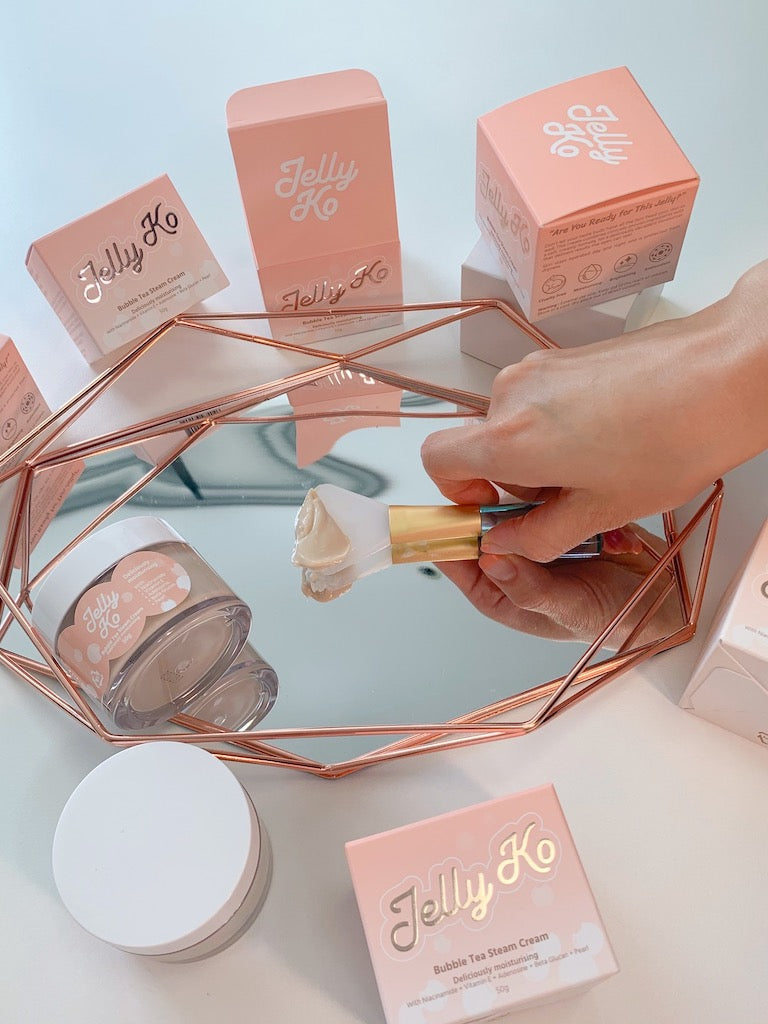
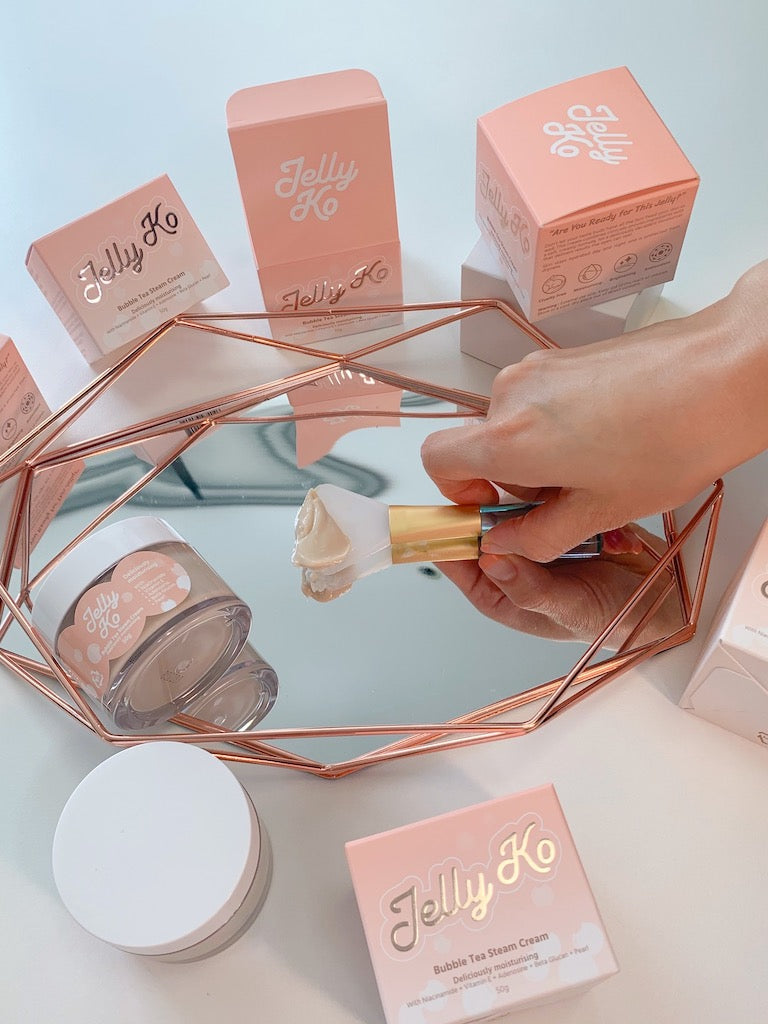
As customers search for alternatives, YesStyle remains one of the most obvious global Asian Beauty retailers. Selling not only Korean beauty brands, the platform has a wide range of Japanese, Chinese, Taiwanese and indie beauty brands, including our own Jelly Ko.

Jelly Ko is now available on YesStyle, so keep an eye out for our products while you browse.
Can Olive Young Replicate Its Success Overseas?
In the US, Olive Young’s next challenge is differentiating itself from Amazon, Sephora, Ulta and established specialist K-Beauty retailers.
In Korea, its competitive advantage extends far beyond product availability. It rests on its breadth of assortment, trend-led merchandising, relationships with emerging brands, integrated omnichannel model and distinctive discovery-shopping experience. Those capabilities will be much more difficult to recreate abroad than opening stores or building logistics infrastructure.
One of the reasons is that many of the Korean brands that define the Olive Young experience are already available through competitors. Consumer expectations around pricing, loyalty, convenience and shopping also differ significantly from Korea. Internationally, Olive Young must persuade consumers not only to buy Korean beauty products, but to choose Olive Young as the platform through which they discover them.

What About China?
Olive Young has not given up on China. Six years after closing its last Chinese store, it is considering a return as a platform for emerging Korean labels.
The Chinese beauty market Olive Young faces today is very different from the one it entered in 2013.
While K-Beauty retains strong credibility and Korean manufacturers remain exceptionally good at commercialising new ingredients, C-Beauty has nevertheless closed much of the gap.
Particularly in colour cosmetics, ornate packaging, rapid product development and value, Chinese brands are giving many Korean brands a run for their money. Chinese brands are also often formidable storytellers. Brands such as Flower Knows have built highly distinctive visual worlds, while some heritage Korean brands lost part of their identity through the shift towards safer, algorithm-friendly branding, a phenomenon often described as “blanding”.

Olive Young’s platform model may reduce some of the risk associated with its earlier Chinese expansion because it offers more flexibility than a high-fixed-cost store network. It means the company can test demand, rotate assortments and invest behind the products that gain traction. It can also provide market data, consolidated logistics and negotiating power that individual emerging brands may lack.
However, "Made in Korea" is no longer enough to sustain retention once acquisition costs, discounting and competition from domestic brands are taken into account.
What Olive Young Should Do Next
Olive Young’s priority should be to translate, rather than simply export, the model that made it successful in Korea.
That means developing merchandising capabilities around local consumer preferences while protecting its core strength as a Korean beauty curator.
Its international assortment, pricing, loyalty programme, content and store experience must feel authentically Olive Young without assuming that Korean retail habits will transfer unchanged.
The company should also rebuild trust with international customers affected by the Global Mall transition and continue positioning itself as a global growth platform for Korean indie beauty brands.
Olive Young’s greatest opportunity is not to become another international beauty retailer. It is to become the platform that discovers and scales the next generation of Korean beauty brands.
Work With STYLE STORY
If you are an international business looking to work with Korea, this is exactly what STYLE STORY does.
Our Korea-based team supports international businesses navigating the Korean beauty industry, from launching and sourcing to manufacturing, market entry and distribution. Whether you're a beauty and wellness brand just getting started, a global investor or a medical professional looking to broaden your skill set, reach out to learn more about how we can work with you and your business.
Listen to More Episodes
Connect with Lauren
A Kind Request
If you reference insights, data or research from this episode in your own content, please credit The Korean Beauty Show and tag us where possible.
Previous


Leave a comment
Comments will be approved before showing up.