



The K-Beauty Marketing Trends That Need to Die in 2026


The K-Beauty Marketing Trends That Need to Die in 2026
If Korean beauty feels louder, stranger and a lot more performative than it used to, you're not imagining it.
In 2025, we reached a peak inflection, where K-Beauty marketing stopped explaining skincare and began acting it out instead. Scientific terms like exosomes became props, clinical procedures like microneedling were treated as cosplay and consumption itself became content.
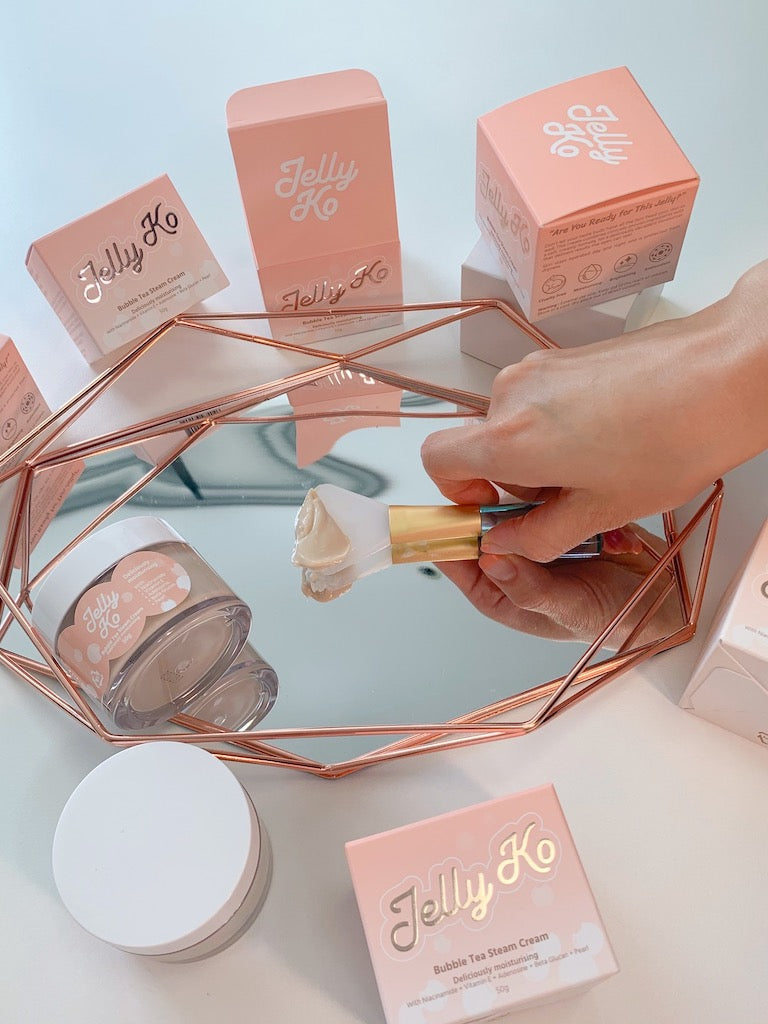
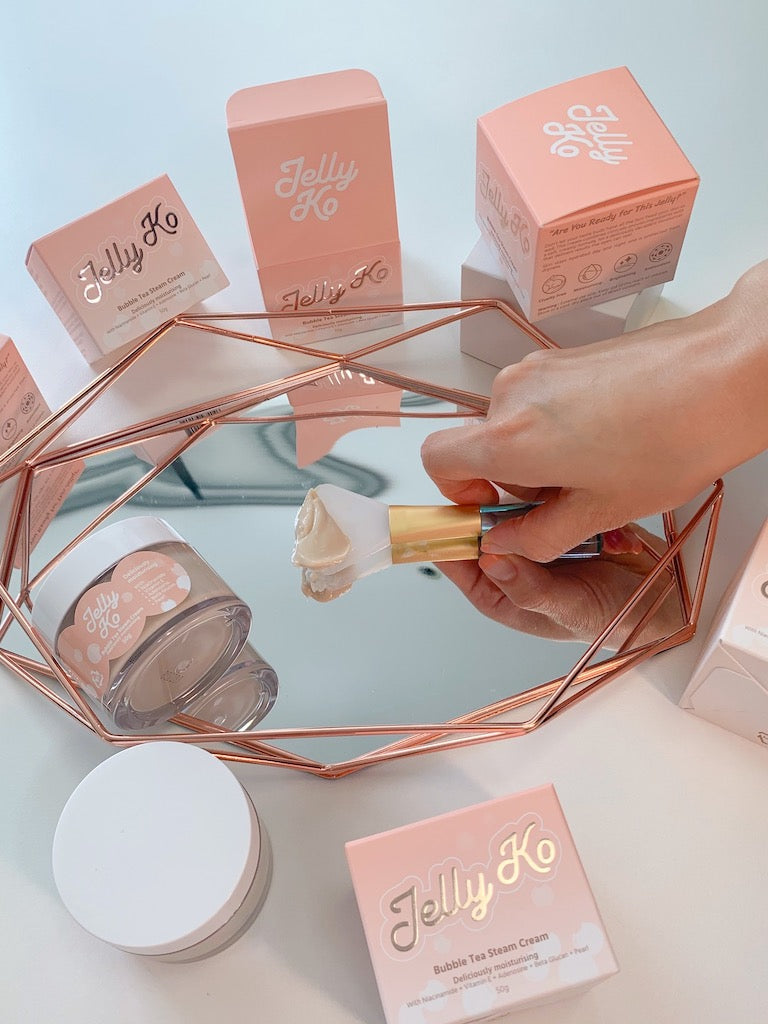
If you're new to the Korean Beauty Show podcast, then welcome. On this show, we explore the intersection of Korean beauty, industry trends and what really happens when products leave TikTok and land on real skin. I'm your host, K-Beauty industry consultant Lauren Lee, founder of consultancy STYLE STORY and Korean beauty brand Jelly Ko.
Lsten to the full episode here:
Trend 1: Exosomes That Are Not Really Exosomes
Let's start with one the biggest trends in Korean beauty of 2025, “exosomes.”
Now in true cell biology, exosomes are a specific category of extracellular vesicles. Not only do they need to be isolated in a lab setting there are very specific ways of handling and storing them. Because of how intricate and difficult this process is, many scientific researchers actually avoid using the word “exosome” and speak instead about what they call "small extracellular vesicles" or EVs.
In most jurisdictions around the world, using human-derived exosomes is prohibited in skincare and cosmetics.
Skincare marketing however has run away with the term “exosome” and taken it away from the strict scientific meaning.
When a cosmetic product claims to contain "exosomes", what's often inside may be a mix of anything from conditioned media and platelet lysates to vesicle types like plant or milk vesicles, none of which have been characterised in a laboratory.
When you layer on marketing claims around collagen regeneration, healing, or dramatic anti-inflammatory effects (all non-allowed claims in regular skincare anyway), the result is a complete breakdown of scientific clarity.
I previously discussed how Korea’s regulators responded to this trend in Korea in 2025. For more details, tune into the episode Why Korea Banned ‘Exosome’ Skincare Ads.
In 2026, my recommendation is simple: When a cosmetic product claims it contains exosomes, ask one question: Where are the test results for THIS formula that verify that it still contains anything resembling true exosomes?

Trend 2: Topical PDRN as a Needle-Free Miracle
Next is topical PDRN, the kind you'll find in creams, serums and ampoules. In 2025, I predicted this ingredient would be one to watch. Unfortunately I didn't predict just how pervasive and problematic its marketing would become.
In 2025, the bulk of the marketing around this ingredient implied that topical PDRN is a needle-free version of what injectable PN does in a clinic. Everyone from Tiktok dermatologists to influencers and regular beauty fans were singing its praises, listing out the "best PDRN creams to try" and suggesting that adding "more" of the ingredient to a cream would make the product "more powerful" somehow.
However, the collapse of clinical context into cosmetic use is not only misleading because it's not based in reality or data, but because it's a breach of cosmetic advertising both in Korea and abroad.
Successful outcomes using PN and PDRN in clinical settings depend on delivery method, dosing, stability and most importantly, where the active ingredient actually reaches; namely the epidermis. Suggesting that topical application that can't possible reach the epidermis (yes, even with spicules) is in any way the same as an injectable product is fundamentally misleading and misrepresents how PDRN works at a biological level.
In 2026, I would like to see marketers stop trying to insinuate that topical use and injectable are the same thing. Even better - stop telling influencers to try to mimic the look of Rejuran injections on their skin while applying the products.
Trend 3: Spicules Called “Microneedling in a Bottle”
Another trend that also refuses to die is spicules, which continue to be marketed as “microneedling in a bottle" despite authorities in South Korea having flagged category-leading brands for this repeatedly.
Many of these products contain hardened silica particles that exfoliate the skin rather than penetrate it. The irritation that occurs on the skin when the product is first applied is being used in marketing language to make it seem like a "microneedling effect".
This couldn't be further from the truth because a) microneedling occurs at a much deeper level of the skin and b) if these creams and serums actually reached those levels they would be regulated as medical devices, not skincare.
I discussed this trend in detail in a previous episode, Microneedling in a Bottle Scam.

Trend 4: Oversized Skincare for Attention
Another trend that drove me crazy last year was the oversized skincare trend. Many Korean brands were producing life-sized jars and tubs of their hero products and sending them to influencers all over the world purely for PR and social media spectacle.
Not only do these products normalise overconsumption and teach consumers to equate size with effectiveness, they also generate unnecessary garbage. Shipping giant packages like this half way across the world is the definition of waste, racking up carbon emissions in transit only for them to be discarded after a single unboxing video.
In 2026, I'd much prefer to hear brands tell people what their products actually do rather than make a spectacle of them.
Trend 5: Skincare Theatre Instead of Education
Finally, there is what I call skincare theatre, which K-Beauty brands were very guilty of in 2025. By this, I mean the use of gimmicky application methods designed to go viral, like applying products in absurd quantities (i.e. 100 layers of sunscreen), pretending to mimic injections with skincare (ala PDRN cream and spicules), or intentionally irritating the skin to suggest efficacy (i.e. entire faces and necks full of retinol).
Not only does this type of content incorrectly train consumers on how to use powerful actives like retinol, it also positions aesthetic procedures as interchangeable with cosmetics, which they aren't for multiple reasons.
A large portion of the clients who come to us at Jelly Ko do so because they've damaged their skin barriers and are experiencing everything from flaking and dryness to redness and irritation. Often times the culprit is incorrect skincare usage or over-exfoliation.
In 2026, I would love for skincare content to focus on education, safe usage and realistic expectations rather than theatrics designed to win algorithms.
Why These Trends Matter
My frustration with this kind of advertising in our industry is not only because I find them annoying (which I do) but over the long term they have the potential to erode trust, confuse consumers and in many cases create both regulatory and environmental consequences. None of these are good for the Korean beauty industry at large, particularly if we want to improve our global dominance.
When brands are built to win a moment instead of building trust, they sacrifice clarity, cosmetic claims and respect for consumer intelligence.
Viral moments might create temporary interest but at the end of the day skincare is a "habit" category not one built on virality or moments. I would rather see practices that compound consumer trust over time rather than treat the entire industry as a gimmick or joke.
K-Beauty Consultancy
Similarly to Korean skincare, with the rise of K-Beauty globally more foreigners than ever are coming to Korea to visit Korean skin clinics. Often, it's a struggle to know who is reputable as opposed to clinics who are targeting the foreign market because they can't succeed among locals.
In Korea, another complicating factor is that that majority of doctors at skin clinics are licensed physicians, but not necessarily board-certified dermatologists. This distinction matters if you are dealing with real skin conditions rather than purely cosmetic concerns.
That is why I offer one way to work with me:
Watch the Episode
Affiliate Disclosure
Some of the links we share on this site may be affiliate links. If you choose to purchase through them we may earn a small commission, at no additional cost to you. We thank you in advance for supporting us, as this helps to offset the cost of producing our show.
A Kind Request
If you take insights, data or analysis from this podcast and reuse them in your own content, we kindly ask that you credit The Korean Beauty Show and tag us where possible.
Previous

Korean Beauty’s Blurring Technique


"In 2025, K-Beauty marketing stopped explaining skincare and started acting it out. In 2026, the industry needs to get back to clarity, not cosplay."
- Lauren Lee, Host of the Korean Beauty Show podcast
Leave a comment
Comments will be approved before showing up.