


K-Beauty Is Growing Up: What That Means for 2026


K-Beauty Is Growing Up: What That Means for 2026
Changes are afoot in 2026 as K-Beauty continues to grow and mature as an industry.
In this month’s global news roundup, we're taking a look at what's going on across the world in Australia, China, Germany, the US and Canada. The message is clear: the category is entering it's mature era. Hype alone is no longer enough to grow and sustain a brand and consumers are increasingly demanding more.
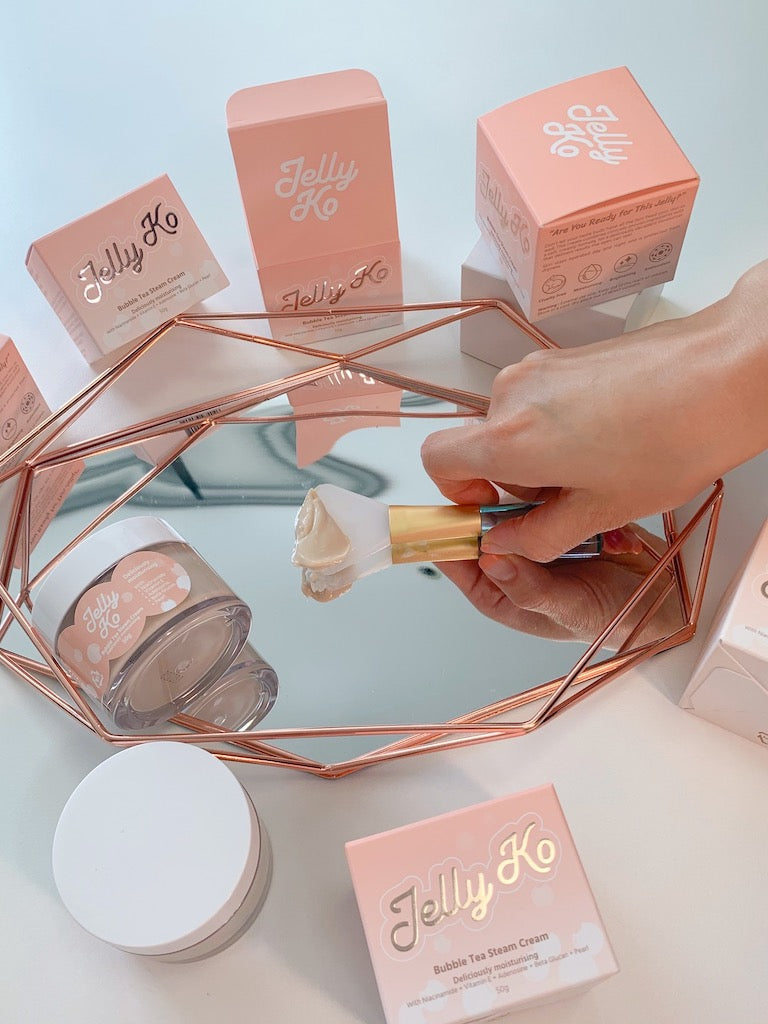
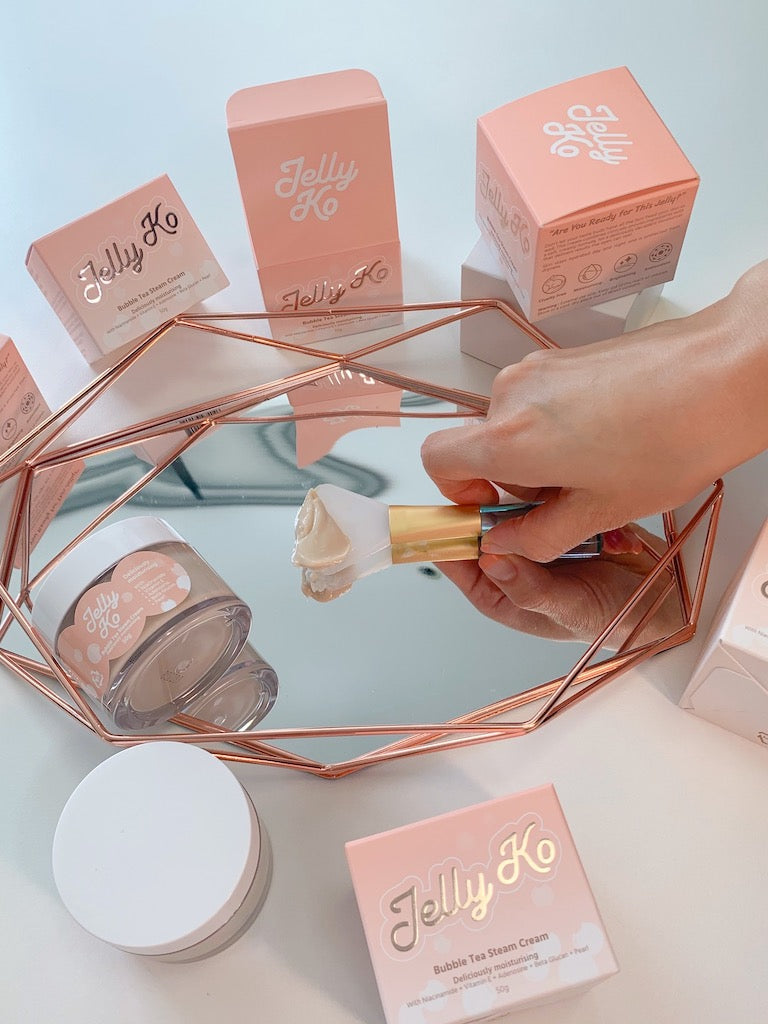
If you're new to The Korean Beauty Show, welcome. On this podcast, we explore the intersection of Korean beauty, industry strategy and what actually happens when trends scale globally. I’m your host, Lauren Lee, industry consultant at STYLE STORY and founder of Korean beauty brand Jelly Ko.
Sephora x Olive Young: The Signal Moment
In January, Sephora announced a strategic partnership with Olive Young.
This is big news for the industry not only because Sephora's exit from Korea was in no small part due to Olive Young's scale but because it proves that K-Beauty is no longer just a cyclical trend that rises and falls every few years. Instead, it has become a scalable operating system.
But this also raises the stakes. Olive Young and Sephora have announced a rollout into 650 stores across North America and further expansion planned into Europe, Australa and the Middle East.
This will be accompanied by regulatory scrutiny, a rise in consumer expectations rise and a shift in execution as well.
Source: Sephora
The End of Easy Growth
In a recent industry deep dive with Cosmetics Design Asia, I shared what will shape K-Beauty in 2026 and the keyword was discipline.
Regulators in Korea are strengthening their stance on ingredient language and quasi-medical claims, particularly around trending ingredients like spicules, exosome-linked cosmetics and regeneration. The gap between domestic enforcement and export marketing still exists though and it's important to narrow it for the sake of long-term credibility.
On the product side, novelty for novelty’s sake is losing power. Instead, we’re seeing harder-working hybrid formats and streamlined routines replacing steps rather than adding them.
The ingredient focus is shifting towards derm-adjacent actives like PDRN, peptides, EGF and retinal (although not without problems on the regulatory side, as discussed above) and supported by barrier-first ingredients such as ceramides, Centella and squalane.
And importantly, the most durable growth is no longer driven solely by Gen Z virality. Consumers in their 30s and 40s (who are more focused on prevention, slow ageing and visible results) are becoming the backbone of sustainable expansion.
When Hype Backfires: The World of W Fallout
In Australia, a ticketed K-beauty event promoted with “$100 of Asian Beauty freebies” ended in refund requests and complaints to Australian regulators after attendees reported long queues, limited stock and inconsistent distribution. Many consumers took to social media platforms to vent their displeasure and what they described as "misleading" hauls.
In a category built on word-of-mouth and community credibility, overpromising carries real consequences.
Source: The Sydney Morning Herald
China’s Structural Shift
Amore Pacific's brand Etude (formerly Etude House) recently suspended its Tmall flagship in China again, marking a second retreat from the country's largest e-commerce platform.
I spoke with Jing Daily about what this means for the future of K-Beauty and whether it's a sign the category is in trouble in China.
While it's true that K-Beauty has had a rough ride on the mainland over the past decade, beauty channels have evolved in China in the post-pandemic era and what once worked well for legacy brands no longer translates in the same way.
For a start, Tmall is intent-led commerce where consumers arrive ready to buy. Douyin on the other hand is discovery-led, and demand is created through video, creators and livestreaming. Brands that succeed on Douyin operate with entirely different models to the old Tmall one and they can't simply “migrate” from one to the other.
Sources: Is K-Beauty Poised for a Comeback in China and Olive Young Goes Global as Etude Falters in China
Prevention Over Excess
I recently spoke with German Seduction Magazine about K-Beauty's second wave, highlighting how the industry isn't built on 10-step routines but rather on daily maintenance: consistent SPF, gentle cleansing, barrier support and incremental improvement. In-clinic treatments are positioned as supplements, not substitutes.
Looking ahead to 2026, the most resilient growth areas appear to be advanced sun care, inner beauty and post-procedure skincare. These are all categories that reward efficacy, stability and regulatory alignment over spectacle.
Jelly Ko's Dewy Glaze Toner was featured as the perfect K-Beauty product for "glass skin".
Source: Seduction Magazine

My Arirang Appearance
I was invited to appear on Korean Arirang to discuss K-Beauty’s global rise.

Arirang TV’s international programming is designed to explain Korea to the outside world with context. I was invited to the show because my career mirrors the global trajectory of K-beauty itself. Having first arrived in Seoul as an exchange student in 2011, I've worked inside the Korean beauty industry for 15 years, bringing a rare combination of Korea-side execution and export-market perspective from a foreigner living in Korea.
Question of the Month: Expiration Dates
A listener asks:
"Long time listener of your podcast here.... would love to hear an episode on expiration dates of skincare. How strict are they, how long past the date are products safe to use? Is 2 years too long? Why do products last so long past their expiration dates? I only have 1 face and it''s so hard to use products up!!!! Thanks in advance!"
From a founder and manufacturing standpoint, expiration dates are conservative. They’re based on stability testing assumptions, worst-case storage scenarios and a safety margin.
What that means in reality is that many well-preserved products can remain chemically stable far beyond their printed date if stored properly. That said, it depends heavily on the formula.
- Most stable: balms, oils, thicker creams in pumps or airless packaging.
- Least forgiving: minimally preserved “clean” formulas, oxidising vitamin C serums and sunscreen.
My rule: don’t obsess over the calendar but instead watch the product. If it starts to smell different, change in texture, separate or irritate your skin I would take that as a more meaningful indicator than the date alone.
K-Beauty Product Recommendations of the Month
Before we wrap, here are my picks this month (AKA one must, one meh, one miss).
One Must
Not technically K-Beauty (I know, I know) but I’m letting it into the keepers because I’ve had such a hard time replacing my discontinued APLB eye cream. After years of searching, my current replacement is the SANA Nameraka Honpo Soy Milk Isoflavone Wrinkle Eye Cream.

It’s an affordable Japanese classic that does the basics extremely well: deep hydration, a gentle retinol for smoothing early fine lines, plus vitamin E for antioxidant support. It’s also fragrance-free and colourant-free, which makes it a safe bet if you’re sensitive around the eye area. I’ve been using it for about 2 months and it’s just… pleasant! No drama, no irritation and it actually delivers on comfort and softness.
One Meh
This month’s meh is the Aestura Retinoid Eye Serum.
It’s a lightweight eye treatment built around retinoid technology that promises hydration and soothing support to reduce the risk of irritation... and on paper it checks a lot of boxes. In practice, I just didn’t feel it did much. It didn’t irritate (good), but I also didn’t notice a meaningful step up in smoothing, brightening or tightening. It’s not bad, it’s not offensive - it’s just… meh!
One Miss
My miss of the month is the COSRX AHA BHA Vitamin C Booster Serum.
It’s positioned as a brightening, exfoliating booster, but it’s important to know this is not a true vitamin C serum in the way most people mean it. It doesn’t contain L-ascorbic acid, so while it may be gentler for sensitive skin, I personally didn’t see anything beyond basic hydration.
It’s also only 30ml, which means you don’t really get enough time to properly assess results before it’s gone. For me it was a miss overall - not “bad,” just not one I’d bother repurchasing and certainly not worthy of recommending to anyone.
Non-Beauty Recommendation
And finally: 두쫀쿠: short for 두바이 쫀득 쿠키 (“Dubai Chewy Cookie”) is currently one of Korea’s biggest food trend sensations.
It’s a chewy, gooey cookie that borrows from the “Dubai chocolate” wave and turns it into something very Korean: a stretchy marshmallow-like exterior with a crunchy pistachio/cream-style interior.
It’s taken off because it’s insanely shareable on TikTok and Instagram (that pull-apart texture basically does the marketing for it).
Just a warning though: word on the street is 500 calories per cookie, so proceed accordingly.
Final Thoughts
The next phase of K-Beauty will reward brands that think beyond launches and virality and towards retention, regulatory alignment and long-term credibility. In particular, the brands that win overseas in global markets will not necessarily going to be the same ones that win in Korea's domestic market because the consumer demands and markets are fundamentally different. What works in Korea can't necessarily scale overseas so the approach needs to be different.
Catch up on the last episode
Affiliate Disclosure
Some of the links we share may be affiliate links. If you choose to purchase through them we may earn a small commission, at no additional cost to you. Thank you for supporting the show.
A Kind Request
If you reference insights or research from this episode in your own content, please credit The Korean Beauty Show and tag us where possible.
Previous

Korean Beauty’s Blurring Technique


"In this month’s global news roundup, we're taking a look at what's going on across the world in Australia, China, Germany, the US and Canada."
Lauren Lee, Korean Beauty Consultant
Leave a comment
Comments will be approved before showing up.